

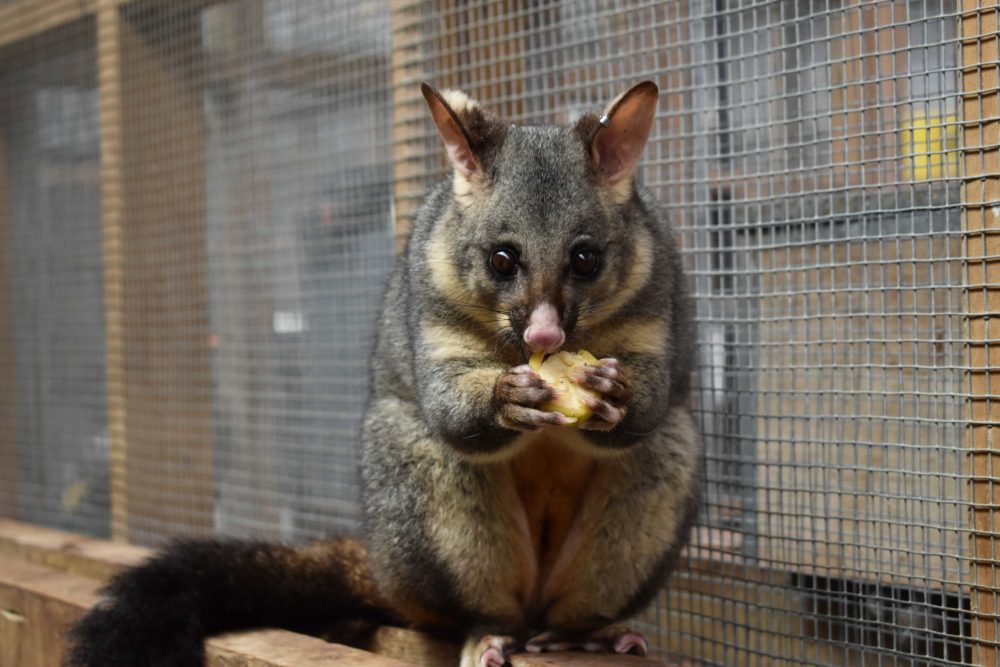
You don’t need a new gene to get a wild new look. Sometimes, all it takes is one that stops working. That is what scientists in Australia found when they looked into the strange fur colors of certain marsupials. Turns out, what makes a black quoll or a yellow mole stand out isn’t some fancy new trait, but a glitch in their DNA.
Researchers at La Trobe University took a close look at the pigment genes behind fur color in Australian marsupials. The study, published in The Royal Society, found that in many cases, a 'broken gene,' not a new one, is what flips the color switch.
Across several species, the same pattern kept showing up. A gene stops working, and a bold new fur color appears.
ASIP vs. MC1R
At the center of this story are two important genes: ASIP and MC1R. These genes act like a tag team, controlling whether an animal makes dark pigment (called eumelanin) or light pigment (called pheomelanin). It is all about balance. When they are both doing their job, you get coats with mixed colors, like grey or brown with specks or bands.
Phys / Per the study, MC1R drives the creation of dark pigment. ASIP, on the other hand, tells MC1R to take a break now and then, letting the lighter pigment come through.
This switch-up leads to that mottled, camouflage look you see in a lot of wild animals. But if one of those genes breaks, the system gets stuck. The animal makes only one pigment, and its fur ends up one solid color.
The Genetics Behind It
That is exactly what is happening in black eastern quolls and Tasmanian devils. In these animals, the ASIP gene is missing a big chunk of DNA. That broken gene can’t shut off MC1R. So, the animals continue to produce dark pigment. The result is a jet-black coat in quolls and a dark brown-black one in devils.
However, what is wild is that these two animals, even though they are related, didn’t inherit the same broken gene from a common ancestor. Each developed the mutation on its own. This is a textbook case of convergent evolution, where two different species develop the same trait independently, as it helps them survive.
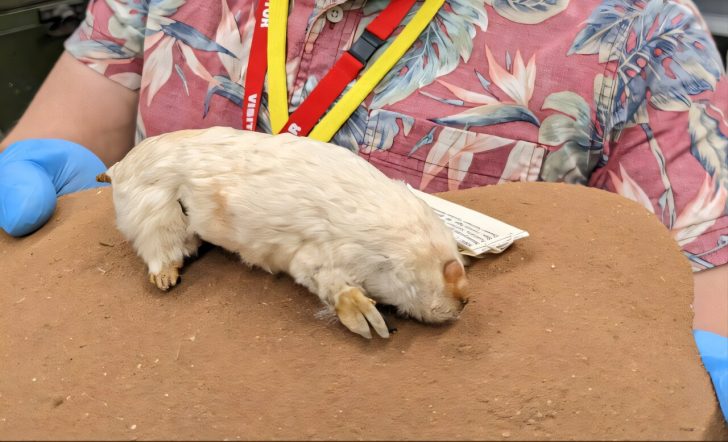
Now flip that script, and you get the marsupial mole. These tiny, underground diggers look like they’ve been dipped in pale yellow paint. Scientists found the cause: a busted MC1R gene. Because MC1R isn’t working, these moles can’t make dark pigment at all.
Phys / Evolution is not just about building new things. It is also about breaking stuff. For a long time, biology focused on how new genes create new features.
With that switch permanently off, their fur turns yellow from the only pigment left, pheomelanin.
Evolution by Loss
Earlier this year, another study on brushtail possums showed that a small tweak in the ASIP gene leads to black morphs in that species, too. Possums with two copies of the mutated ASIP gene grow darker fur than their grey relatives. Researchers also noticed that in the dasyurid family, which includes quolls and devils, the ASIP gene is evolving fast.
That makes sense given how many different coat colors show up in this group.
But this study shows how powerful gene loss can be. Sometimes, subtracting a gene works better than adding a new one.
This marks a shift in thinking. Losing a gene doesn’t always mean something went wrong. In some cases, it might give the animal an edge.