

BioHarvest Sciences just teamed up with Saffron Tech to shake up how saffron is made. On October 30, 2025, the two companies announced a strategic partnership to produce saffron compounds in a laboratory, not in the field.
The goal is to use BioHarvest’s Botanical Synthesis platform to grow saffron’s key compounds without farming. Think of it like brewing the best part of the plant in a clean, scalable way. Less dirt, less labor, and way more control.
It takes thousands of flowers and hours of hand-picking to make just a little bit. Plus, over 80% of it comes from Iran, so politics and seasons can wreck the supply.

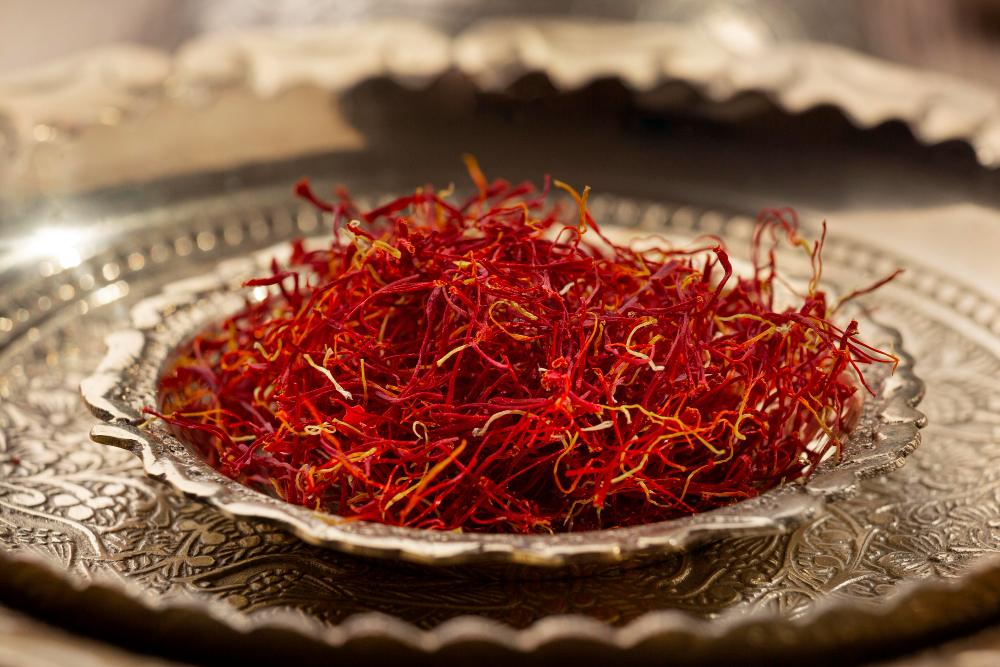
Silvia / Pexels / Saffron is ridiculously expensive. It can go for over $10,000 per kilo. That is not because it is rare, but because it is a nightmare to grow.
This deal solves that. By making saffron in a lab, they cut out the chaos. No weather problems, no shipping delays, no border issues. It is pure saffron, made clean and on demand. That means more stable prices, more products, and a lot less stress.
The Terms of the Deal
Under the deal, Saffron Tech gets 75% of the rights to the new saffron formulations and patents. BioHarvest keeps 25%, but they also get the job of making the product at scale. Once it is ready, BioHarvest will push the new saffron nutraceuticals to consumers directly.
This is a deep collaboration with clear roles. Saffron Tech brings the know-how in plant cell culture. BioHarvest brings the tech and the production muscle. Together, they are building something both can profit from.
Most biotech projects take years. These two don’t have time for that. Instead of moving step-by-step, they are running Stage 1 and Stage 2 of the development at the same time. That means solid-phase and liquid-phase research will run in parallel, not in sequence.
They are using what Saffron Tech already figured out, adding BioHarvest’s synthesis engine, and moving fast. This approach could shave months, maybe years, off the typical timeline.

GTN / Saffron is a powerhouse when it comes to health. It is known for its benefits in improving memory, eye health, mood, and reducing inflammation. That is why it is a hot item in the wellness space.
By producing clean, consistent saffron compounds, BioHarvest and Saffron Tech can offer these benefits without the variability associated with traditional farming. It is pure function, no fluff. Expect to see capsules, powders, or even drinks loaded with the benefits of lab-grown saffron.
How Is BioHarvest Doing?
Along with the partnership news, BioHarvest provided a sneak peek at its Q3 2025 financial results. They generated approximately $9.1 million in revenue. EBITDA remains in the red, ranging from negative $0.7 million to $0.4 million. But they are narrowing the gap.
As we speak, they have $11 million in cash. Not huge, but enough to keep moving. For Q4, they are expecting similar revenue and aiming to break even on EBITDA.
On November 10, BioHarvest closed a $19.9 million public offering. That is real money and gives them a big cushion. CEO Ilan Sobel says these funds are all near-term capital expenses.
This funding strengthens their position across both their consumer business and CDMO operations. With cash in hand, they can scale faster and smarter, especially as this saffron project ramps up.
Dr. Zaki Rakib, who leads BioHarvest’s CDMO side, says this deal proves their Botanical Synthesis model works in the real world.
CEO Ilan Sobel is also all in on this. He says the company is gaining momentum in both its core supplement business and in these new partnerships. And he is eyeing breakeven EBITDA as a short-term goal.