

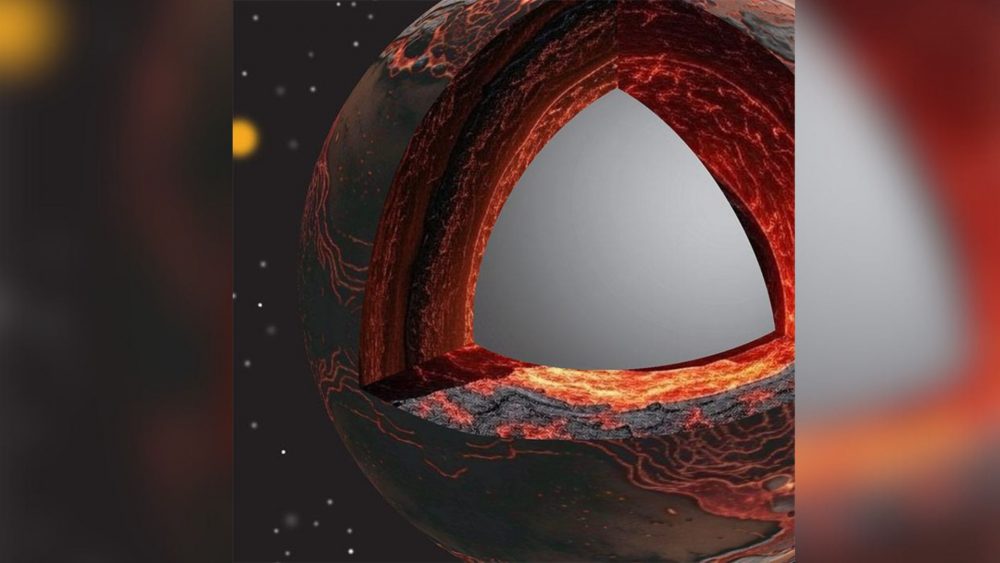
Lava puddles buried nearly two thousand miles below our feet might tell the story of how life began. Yet this is exactly what scientists are now exploring. Huge hidden structures deep inside Earth could be ancient time capsules that formed during our planet's early chaos. They might hold the chemical fingerprints that shaped Earth's cooling, its volcanoes, and even the atmosphere that made life possible.
This research gives us a rare chance to peek at Earth's childhood. The more scientists learn about these strange underground features, the clearer it becomes that they may be more than geological leftovers. They could be one of the earliest steps in the chain that led to oceans, continents, and the beginnings of biology as we know it.
What Are Lava Puddles?
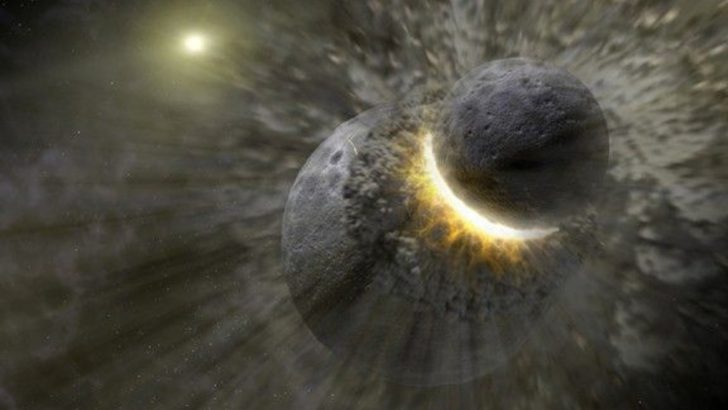
The News / Deep under the crust and mantle lie two colossal structures called Large Low Shear Velocity Provinces. They sit near the core, about 1,800 miles down, and they are huge.
One is under Africa and the other under the Pacific. Each one is hotter and heavier than the surrounding mantle. These behemoths are as wide as continents, far older than any tectonic plate, and they barely move.
Closer to the core, tucked against or inside these giants, sit much smaller pockets called Ultra Low Velocity Zones. These thin, patchy layers contain partly molten rock, so they act like sticky lava puddles that cling to the core. Their odd behavior hints at a chemistry that does not match the rest of the mantle.
We cannot see any of this directly, and no drill will ever reach that deep. Instead, scientists use seismic waves from earthquakes as probes. When waves hit these structures, they slow down sharply. This slowdown reveals that the material they are passing through is different in temperature, density, or chemistry.
A New Theory of Planetary Formation
For decades, these blobs confused researchers. Older models of Earth suggested that after the early magma ocean cooled, the mantle should have ended up fully mixed. That means everything inside it should look fairly uniform. But the LLSVPs and ULVZs do not fit that story. They are too distinct, too stable, and too large to be leftovers that somehow escaped mixing.
A recent study led by Yoshinori Miyazaki at Rutgers University offers a fresh explanation. His team suggests that Earth's metallic core slowly leaked light elements into the base of the mantle. This leak happened over billions of years as silicon and magnesium escaped from the core and entered the remaining pockets of magma near the boundary.
According to the model, the LLSVPs and ULVZs are the ancient frozen remains of Earth's original magma ocean. They remained intact because they absorbed material from the core and became distinct enough to survive unchanged, while the rest of the mantle evolved.
The Crucial Link to Planetary Habitability
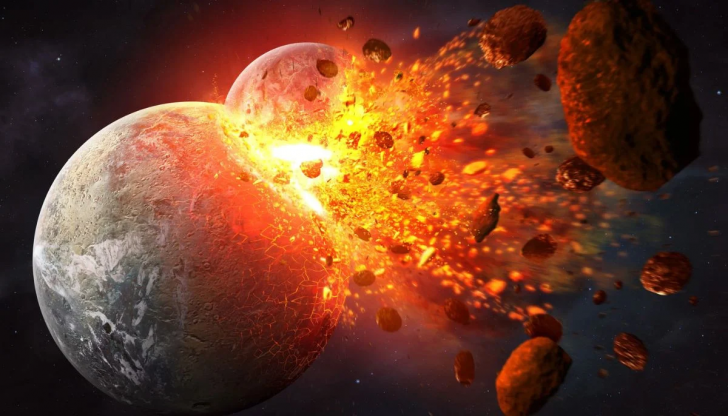
Space / The study suggests that this deep interaction between core and mantle played a key role in Earth becoming a living world instead of a dead one.
To begin with, it helped regulate planetary cooling. By exchanging both heat and material, the core and mantle shaped how fast Earth cooled over time. A planet that cools too quickly shuts down volcanism and magnetic activity. Too slowly, and it stays molten. Earth landed in a sweet spot because of this balance.
Plus, these deep structures likely feed mantle plumes, which rise to form hotspot volcanoes. Places like Hawaii and Iceland owe their existence to this system. These volcanoes release gases that help build new crust, reshape the oceans, and play a role in the carbon cycle. Without them, Earth's surface would be far more static.